
The home buying process in California follows a clear sequence, and knowing it in advance turns a stressful experience into a manageable one. From getting pre-approved to opening escrow, clearing contingencies, and closing, each step builds on the last. California also has a few things it does its own way, like escrow and contingency removal, that are worth understanding before you start. This guide walks you through the whole journey, step by step, with a realistic sense of the timeline.

Save Financial is a California-licensed mortgage brokerage, and we guide buyers through the financing side of this process every day, in step with your agent and escrow. Here's what to expect from start to keys.
Buying a home has two tracks that run at once: the transaction, handled by you, your agent, and escrow, and the mortgage, handled by us. They move in parallel and come together at closing. From an accepted offer to closing, a typical California purchase takes about 30 to 45 days, though the shopping phase before that can take weeks or months. The steps below follow the natural order, and while some overlap, understanding the sequence helps you stay ahead of each deadline.
Before you shop, get your financial house in order. Check your credit and correct any errors, since your score affects your rate. Gather your income and asset documents so you're ready to apply. Keep your spending steady and avoid opening new credit or making large purchases, because lenders scrutinize recent debt. And build your savings toward your down payment, closing costs, and a cushion. A little preparation here makes everything downstream smoother, and it's the least stressful time to fix any issues.
This is where financing begins. We review your income, assets, and credit and issue a pre-approval letter showing what you can borrow, which becomes your shopping license. A real, document-backed pre-approval carries far more weight than an online estimate, and in California's competitive markets, it can make your offer stand out. Our mortgage pre-approval page covers this in depth, including the strongest kind, a fully underwritten pre-approval that helps you compete like a cash buyer.
A good buyer's agent is your guide through the transaction. They help you find homes in your range, understand local markets, write competitive offers, and navigate negotiations and deadlines. We work alongside your agent throughout, confirming your financing strength to listing agents when it helps your offer. If you don't have an agent yet, this is the time to choose one you trust.
Now the fun part. With your budget set and your pre-approval in hand, you tour homes and narrow down what fits your needs and your numbers. Keep your pre-approval amount in mind, and remember that the maximum you're approved for isn't necessarily what you should spend. When you find the one, you're ready to make your move quickly, which matters in a fast market.
When you find the home, your agent prepares an offer using California's standard residential purchase agreement. The offer includes your price, your proposed terms, your financing details, and contingencies that protect you. You'll include an earnest money deposit, typically a small percentage of the price, which shows the seller you're serious and is held in escrow, not paid to the seller directly. The seller may accept, reject, or counter, and there may be some back-and-forth before you reach an agreement. Your pre-approval letter goes with the offer to demonstrate you can close.
In many California markets, desirable homes draw multiple offers, so how you structure yours matters as much as the price. Beyond offering a strong price, you can strengthen your position with a solid, underwriter-reviewed pre-approval, a larger earnest money deposit, a flexible closing timeline that fits the seller, and shorter or clearly defined contingency periods. Some buyers add an escalation clause that automatically raises their offer up to a cap if others come in higher. We help by confirming your financing strength directly to the listing agent, which reassures a seller that your offer will actually close. In a competitive situation, the seller often chooses the offer that feels most certain, not just the highest number, and certainty is something a strong pre-approval and a responsive lender provide.
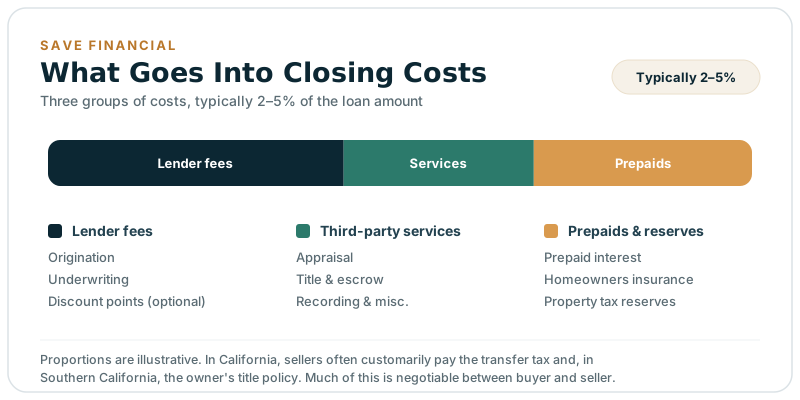
Once your offer is accepted, you open escrow. In California, a neutral escrow company acts as the middleman for the entire transaction, holding your earnest money and all funds and documents, making sure every condition is met, and releasing money only when everything is in order. Opening escrow starts the official clock on your contingency periods and the path to closing. Escrow protects both sides, and it's a defining feature of how California closings work.
This is one of the most important phases, and California handles it in a specific way. Your purchase agreement includes contingencies, conditions that must be satisfied for the sale to proceed, and each has a timeframe. The common ones are the inspection contingency, which lets you investigate the home's condition, the appraisal contingency, tied to the property's value, and the loan contingency, tied to your financing being approved.
During this window, you complete your due diligence. If something significant turns up, you can negotiate repairs or credits, or in some cases cancel and recover your deposit. A California-specific detail matters here: contingency removal is generally active, meaning you must remove each contingency in writing by its deadline, rather than it happening automatically. Your agent tracks these deadlines closely, and we keep your loan moving so the financing contingency clears on time.
Two separate checks happen during the contingency period. You order a home inspection, where a professional examines the property's condition and flags issues, which is your chance to learn what you're buying and negotiate if needed. Separately, we order the appraisal, where a licensed appraiser determines the home's market value for the lender, confirming it supports the loan. The inspection protects you; the appraisal protects the loan. If the appraisal comes in below the price, that becomes a negotiation point, and we'll talk through your options.
Sometimes the appraisal comes in below the agreed price, which is common in fast-moving markets where offers outpace recent sales. It isn't a crisis, but it does trigger a decision, because most loans are based on the lower of the price or the appraised value. You generally have a few options: negotiate with the seller to lower the price to the appraised value, cover the gap with additional cash, meet somewhere in between, or, if you have an appraisal contingency, cancel and recover your deposit. In some cases, we can request a reconsideration of value if there's strong supporting data. We walk you through the math on each path so you can decide with a clear head rather than under pressure. Knowing this can happen, and having a plan, keeps a low appraisal from derailing your purchase.
While the transaction proceeds, your mortgage moves through processing and underwriting in parallel. We verify your income, assets, and credit, order the appraisal, and submit your file to the lender's underwriter, who reviews everything and issues an approval with any conditions. This is the heart of the mortgage process, and the biggest thing you control here is responsiveness: when we request a document, sending it quickly keeps your loan on schedule. Once all conditions are met, you receive a clear-to-close.
California requires sellers to disclose a lot about the property, which protects you as a buyer. You'll receive documents like the Transfer Disclosure Statement, where the seller discloses known conditions, and a Natural Hazard Disclosure, which reports whether the home sits in flood, fire, or earthquake zones. There may be Mello-Roos disclosures in newer communities, an HOA packet if applicable, and, for older homes, lead-based paint disclosures. Read these carefully, because they tell you important things about the home and the area. Your agent helps you understand them, and they can factor into your contingency decisions.
As your inspections, appraisal, and loan approval come together and you're satisfied, you remove your contingencies in writing by their deadlines. Removing contingencies is a meaningful commitment, because your earnest money is generally at greater risk once they're removed. That's why the sequence matters: you remove them as each condition is genuinely satisfied. We make sure your loan approval is solid before your financing contingency comes off, so you're not exposed.
In hot California markets, buyers sometimes waive contingencies to make their offer more attractive, and it's worth being clear-eyed about the tradeoff. Waiving your inspection contingency means committing without a full check of the home's condition. Waiving your appraisal contingency means you agree to cover any gap if the value comes in low. Waiving your loan contingency means your earnest money is at risk if financing falls through. Each waiver strengthens your offer but shifts risk onto you. Sometimes it's a reasonable move with a strong file and a fully underwritten pre-approval, and sometimes it's more risk than it's worth. We'll give you an honest read on your financing certainty before you consider waiving a loan contingency, so you're making an informed choice rather than a hopeful one. There's no prize for taking a risk you didn't need to.
Just before closing, you do a final walkthrough to confirm the home is in the agreed condition and any negotiated repairs are done. Then closing happens. In California, you sign your loan and closing documents with a notary, often a few days before the official close. You wire your remaining funds to escrow. The loan funds, and the deed records at the county, which is the moment escrow closes and the home is legally yours. Then you get the keys. It's a wonderful moment, and by then all the earlier steps have set you up for a smooth finish.
A few habits keep everything moving. Respond to document requests quickly, since your speed is the single biggest factor you control in the mortgage process. Watch your contingency deadlines with your agent, because California's active removal means missed dates have consequences. Avoid major financial changes, like financing a car or opening credit, until after closing, since they can affect your approval. And keep communication open among you, your agent, escrow, and us, so any issue is caught early. Most closings that run late do so because of slow documents or last-minute financial changes, both avoidable.
How long does the home buying process take in California? From an accepted offer to closing, a typical California purchase takes about 30 to 45 days. The shopping phase beforehand varies widely, from a few weeks to several months.
What are the steps to buying a house in California? Prepare your finances, get pre-approved, find an agent, shop for homes, make an offer, open escrow, complete the contingency period with inspection and appraisal, clear loan underwriting, review disclosures, remove contingencies, do a final walkthrough, and close.
What is escrow in California? Escrow is a neutral third party that handles the transaction, holding funds and documents and releasing them only when all conditions are met. Opening escrow follows an accepted offer and protects both buyer and seller.
What is a contingency period? A window during which conditions like inspection, appraisal, and loan approval must be satisfied. In California, you generally remove contingencies actively, in writing, by their deadlines, rather than automatically.
What disclosures do sellers provide in California? Sellers provide documents like the Transfer Disclosure Statement and a Natural Hazard Disclosure, plus Mello-Roos, HOA, and lead-based paint disclosures where they apply, revealing known conditions and area hazards.
What is earnest money? A deposit, typically a small percentage of the price, that shows the seller you're serious. It's held in escrow, not paid to the seller, and applies toward your purchase at closing.
Do you sign at a closing table in California? Not exactly. California closings run through escrow, and you sign your documents with a notary, often a few days before the official close. The sale closes when the loan funds and the deed records.
What can delay a home purchase? Usually slow document responses or last-minute financial changes on the buyer's side, or issues that surface during inspection or appraisal. Responsiveness and steady finances prevent most delays.
The mortgage is the part of the process most likely to cause stress, and it's the part we make smooth. We handle your financing in step with your agent and escrow, keep your loan ahead of every contingency deadline, and communicate clearly so you always know where things stand. We also compare lenders so your loan is the right one, not just any one, and we're available to reassure listing agents that your offer will close.
Our approach is education first. We explain each step before it happens, so nothing catches you off guard, and we move quickly when speed matters. You're welcome to verify our license on NMLS Consumer Access (NMLS #377740, DRE #01875766) before we begin.
Newport Beach (headquarters) Save Financial 4000 MacArthur Blvd, Suite 600 Newport Beach, CA 92660 (949) 379-5320
Marina del Rey Save Financial 13763 Fiji Way, Suite EU2 Marina del Rey, CA 90292 (310) 759-4757
Steps one and two are the foundation, and we handle the second one. Get pre-approved, and you'll shop with a clear budget and a strong offer, ready to move when you find the right home.
If you're buying a home anywhere in California, reach out to Save Financial. As a California brokerage that guides buyers through the financing side of the whole process, we'll set you up for a smooth journey from pre-approval to keys. Call our Newport Beach office at (949) 379-5320 or request your free pre-approval to get started.
This page is general educational information about the California home buying process and is not legal, tax, or real estate advice. Timelines, contract terms, and disclosure requirements vary by transaction. Loan programs and approval depend on borrower qualifications and lender approval. Save Financial is a California-licensed mortgage brokerage (NMLS #377740, DRE #01875766). Equal Housing Opportunity.
Save Financial is a California-licensed mortgage brokerage (NMLS #377740, DRE #01875766) with offices in Newport Beach and Marina del Rey. Call (888) 703-1840 or request your free rate quote. Rates and terms are subject to change and depend on borrower qualifications and lender approval. Equal Housing Opportunity.