
Programs · 9 min read
California ADU Financing Guide 2026: Every Loan Option
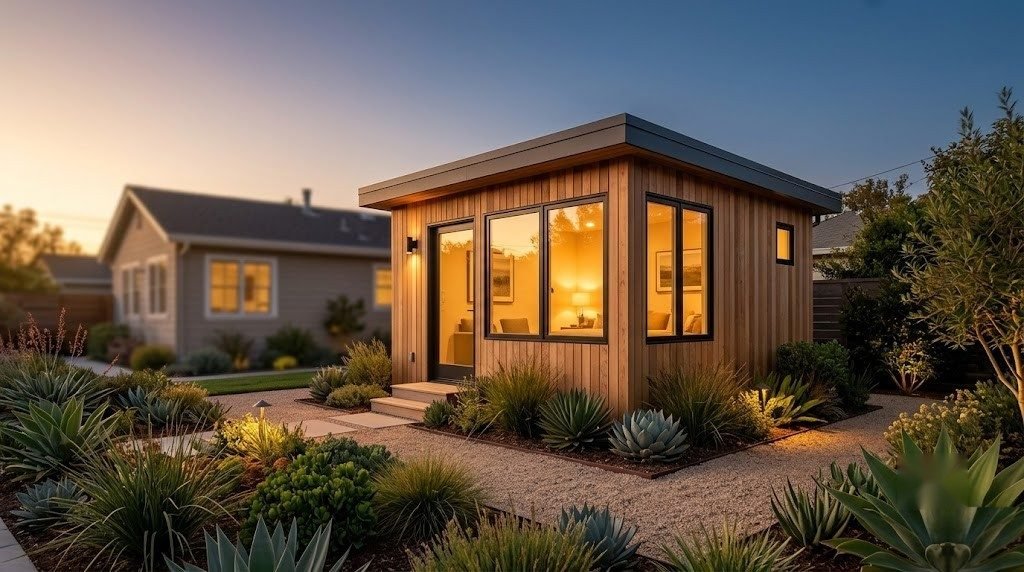
California homeowners can finance an Accessory Dwelling Unit (ADU) through five main paths: (1) HELOC against existing equity (most flexible, variable rate around 8.00%), (2) Cash-out refinance (locks in a fixed rate but resets the first mortgage), (3) HomeStyle or 203(k) renovation loan (purchase + ADU build in one mortgage), (4) Construction-to-permanent loan (for new ground-up builds), and (5) Local programs like San Diego's SDHC ADU Finance Program (up to $250,000). Typical California ADU build cost is $200,000-$450,000; rents range from $1,900-$3,600/month, allowing most ADUs to pay for themselves in 5-15 years.
Why ADUs matter in California
California state law overrides most local zoning restrictions on ADUs since AB 68 (2020) and subsequent legislation. SB 13 mandates impact fee waivers for ADUs under 750 square feet, saving roughly $20,000 per build. SB 543 exempts Junior ADUs (under 500 sq ft) from school fees. The result: ADUs now make up nearly 1 in 5 new homes built in California, with 28,000+ ADUs permitted in 2024 alone. For homeowners, ADUs offer rental income (typical California ADU rent: $1,900-$3,600/month) plus property value appreciation.
Option 1: HELOC (Home Equity Line of Credit)
Most flexible for ADU financing because you draw funds as construction progresses. Typical California HELOC: prime + 0.5% (currently around 8.00% variable), 85-90% combined LTV, 10-year draw period with interest-only payments available, then 20-year repayment. Use case: you have substantial equity in your home and a strong first mortgage you don't want to refinance. Save Financial closes HELOCs in 14-21 days.
Option 2: Cash-out refinance
Replace your existing mortgage with a larger one and pocket the difference for ADU construction. Best when current rates are close to or below your existing rate. California cash-out limits: 80% LTV on primary residence. For a $1.2M home with $400K existing mortgage, you could refinance to $960K and extract up to $560K in cash — more than enough for any California ADU. Downside: you reset your first-mortgage rate and term, so only worthwhile if rates favor you.
Option 3: HomeStyle or FHA 203(k) renovation loan
These programs let you buy a home AND finance ADU construction in one mortgage. Fannie Mae's HomeStyle Renovation works for conventional buyers; FHA 203(k) for buyers using FHA. The lender funds the purchase plus an escrow for ADU construction; an inspector certifies progress as the work is done. Best for buyers who want to add an ADU at the time of purchase rather than years later.
Option 4: Construction-to-permanent loan
A single loan that funds ADU construction and converts to a permanent mortgage when complete. Interest-only during build (typically 12-18 months), then standard amortization. One closing, one set of fees. Best for major new ADU builds (~$300K+) on properties with insufficient equity for HELOC funding.
Option 5: Local government programs
San Diego SDHC ADU Finance Program: Up to $250,000 for owner-occupants earning up to 150% of area median income who agree to rent the ADU at affordable rates for 7 years. CalHFA ADU Grant Program: Previously offered $40,000 for pre-development costs but is paused due to funding exhaustion. Federal SUPPLY Act: Proposed legislation by Rep. Sam Liccardo would create HUD-backed second-position loans for ADUs nationally; not yet enacted.
Will rental income help you qualify?
Most conventional lenders do NOT count future ADU rental income toward DTI for qualifying purposes. You qualify on your existing income alone. Once the ADU is built and rented, you can refinance with documented rental income to count it on a Schedule E. Some non-QM and DSCR lenders WILL count projected ADU rent at origination — useful if you're tight on DTI.
About this article: Save Financial publishes weekly California mortgage market updates. We are a California-licensed mortgage broker (NMLS #377740, DRE #01875766) serving all 58 counties. For a real, personalized rate quote, apply online or call 949-379-5320.