
Market Analysis · 12 min read
Should I Buy a House Now or Wait? An Honest Answer for California Buyers
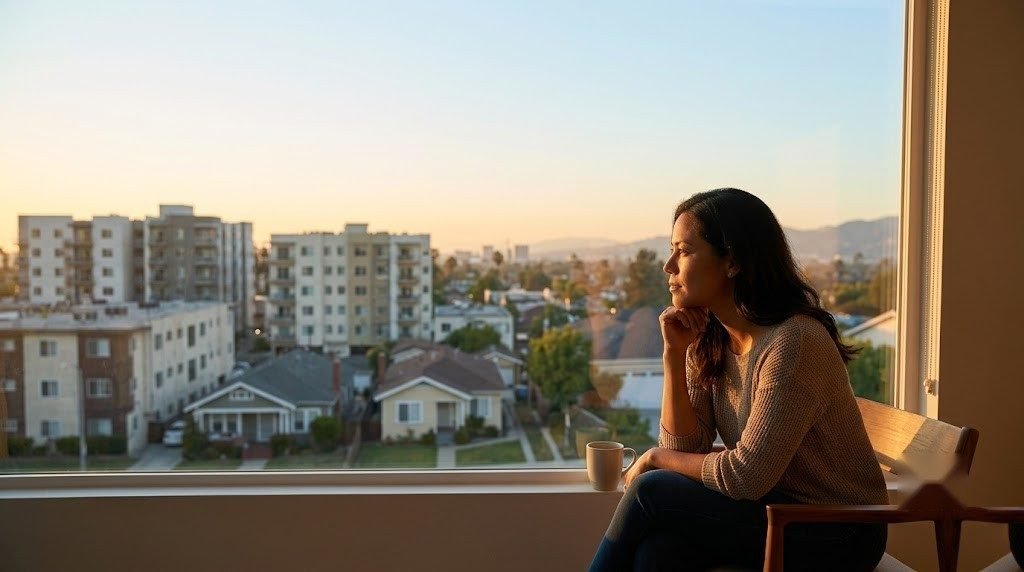
For most California buyers who can comfortably afford today's payment, the data favors buying now rather than waiting. As of May 21, 2026, the average California 30-year fixed mortgage rate is 6.45% — down from late-2023 highs near 8% but up from February 2026's year-low of 6.09%. Major forecasters (Mortgage Bankers Association, Fannie Mae, California Association of Realtors) project rates to settle in the 5.75%-6.15% range by mid-2027, not the 3% lows of 2021. Meanwhile, California home prices continue appreciating at 2.4%-4.0% year-over-year, and rents continue to rise. The strategy housing professionals call ‘marry the house, date the rate’ — buy when you can afford it, refinance later if rates drop — works well when you find the right home and your finances are stable. It fails when buyers stretch beyond their means hoping for a quick refinance that may not arrive. Waiting makes sense only if your finances are stretched at today's rates, your credit is actively improving, or you expect to move within 4 years.
Where California rates and prices actually stand in May 2026
Three data points define the May 2026 California market:
Mortgage rates: The 30-year fixed conforming rate averaged 6.45% across California lenders as of May 21, 2026. The national Bankrate average sits at 6.58%. Rates have moved within a tight band of 6.09% to 6.65% all year — the low was February 18, the high was early May.
Home prices: California's statewide median home price is roughly $885,000 per the California Association of Realtors, up 2.4% year-over-year. Major metros vary widely: Los Angeles County median is around $1,025,000 (down 5.5% YoY per Redfin), San Francisco is $1,425,000, Sacramento is around $620,000, and Fresno is around $410,000.
Inventory: Active listings are up roughly 18% from spring 2025 levels. Days on market average 31 statewide — the most balanced California has seen in five years per California Association of Realtors data.
Three forces keep rates elevated. First, the Federal Reserve held the federal funds rate at 4.25%-4.50% at its May 2026 FOMC meeting — the third hold of the year. Second, core PCE inflation remains at 2.7%, above the Fed's 2% target. Third, the 10-year Treasury yield (which mortgage rates track most closely) sits near 4.59%, partly driven by Iran-related oil price pressure that's lifted bond yields throughout the spring.
Marry the house, date the rate — the framework most lenders use
The housing industry's go-to phrase right now is ‘marry the house, date the rate.’ Bankrate's editorial team describes it as the strategy aimed at ‘wary buyers who are worried about buying while rates are elevated.’ The logic: a home purchase is a long-term decision, but a mortgage is a financial product you can renegotiate.
The strategy works in three steps:
1. Find a home you want to own for at least 5 years. This is the ‘marry’ part — focus on the house, neighborhood, school district, and commute. Don't let today's rate environment dictate which house you buy.
2. Take the mortgage you qualify for today. Even at 6.45%, today's rate is well below the 2023 peak of 7.79% and consistent with the 50-year historical average. Frame it as a known cost, not a permanent burden.
3. Refinance when rates drop enough to justify closing costs. Most refinances require a rate drop of at least 0.75% to make sense after $4,000-$8,000 in closing costs. If rates drop from 6.45% to 5.70% over the next 18 months — within the forecast range — that's the trigger.
Where the strategy fails: when buyers over-stretch on the assumption that they'll refinance soon. Bankrate puts it bluntly: ‘A bad idea is over-extending your budget in hopes of a quick refinance in six months. Rates aren't guaranteed to drop.’ We tell our clients to qualify based on the payment they'd be comfortable with for the next 7 years, not the rate they hope to refinance into next year.
The cost-of-waiting math nobody likes to run
Take a $750,000 California home — close to the median for non-coastal counties — with 20% down ($150,000) and a $600,000 loan.
Buy today at 6.45%:
- Monthly principal and interest: $3,776
- Annual interest paid in year 1: approximately $38,540
Wait 12 months, hope for 5.75%:
- Same home likely costs $768,000 (using California's 2.4% YoY appreciation)
- 20% down requirement rises by $3,600 (now $153,600)
- New loan: $614,400 at 5.75% = $3,586/month P&I
- You save $190/month in payment ($2,280/year)
- But you paid roughly $28,800 in rent during your 12-month wait (using $2,400/month average for an equivalent property)
- Net cost of waiting: $28,800 rent + $3,600 higher down payment − $2,280 monthly savings = approximately $30,120 lost
Even at a more aggressive 5.25% future rate, waiting still costs money once you include rent and appreciation. The break-even analysis published by Mortgage Information Inc. in April 2026 makes the same point: ‘On a $400,000 home with 3.9% appreciation, waiting 1 year means the home costs $415,600 — that's $15,600 more. Plus you paid $25,000 in rent while waiting. Total cost of waiting: $40,600.’
The math overwhelmingly favors buying today and refinancing later, if you can comfortably afford today's payment.
When waiting actually makes sense
Buying isn't always the right answer. Specific situations where waiting is the financially healthy move:
Your payment would exceed 36% of gross income. The 28/36 rule isn't arbitrary — it's the proven boundary between comfortable homeownership and financial stress. If today's payment pushes your back-end DTI past 36%, waiting to either earn more or reduce other debts makes sense regardless of rate direction.
You have less than 3 months of payment reserves after closing. California's unemployment rate is projected to rise to 5.8% per the UCLA Anderson Forecast. Buying without a cushion is risky.
Your credit score is below 680 and actively improving. A 20-point credit improvement saves you approximately 0.125%-0.25% on the rate. On a $600K loan, that's roughly $50-$100/month in lower payment. If you're climbing fast, 90 more days of credit-building can pay for itself many times over.
You expect to move within 4 years. California closing costs run 2%-3% for buyers, plus 6%-7% in seller commissions when you sell. You typically need 5%+ appreciation to break even on a short hold. Renting while you save for the down payment on your ‘real’ home is often smarter.
You're in escrow on another home that needs to sell first. Don't time the market while juggling a sale — finish one transaction before starting another.
Three California-specific tools that change the math
California buyers have programs and tactics that out-of-state buyers don't get:
1. Seller-paid rate buy-downs. A common 2026 structure is the 2-1 buy-down: the seller credits roughly 2.34% of purchase price (about 2% of the loan amount), which buys your rate down by 2% in year one and 1% in year two. On a $750K home, your effective rate becomes 4.45% in year one — saving roughly $670/month. The California Association of Realtors reports about 41% of spring 2026 California sales included some form of seller-paid buy-down or closing credit.
2. CalHFA Dream For All. First-generation California buyers can receive up to 20% of purchase price (capped at $150,000) as a no-monthly-payment shared appreciation second loan. The 2026 round closed March 16; a new round is expected in early 2027.
3. Float-down lock options. Most California lenders, including Save Financial, offer some form of float-down lock — you lock at today's rate, and if rates drop materially before closing, you can re-lock once at the lower rate. Money.com notes this option ‘usually comes with a fee that ranges between 0.50% and 1% of the loan amount’ across lenders. For buyers in 60+ day escrows during the current volatile market, float-down locks remove the regret of locking too early.
What other experts are saying right now
Mike Fratantoni, Chief Economist, Mortgage Bankers Association: ‘The FOMC projections released after this meeting showed that the median member expects higher inflation. A growing number of FOMC members now expect no cuts — or at most, one — to the federal funds target this year, likely due to a more negative inflation outlook.’
California Association of Realtors Chief Economist: Forecasts a 5.9% average 30-year fixed rate for 2026 and 5.5% for 2027, contingent on inflation easing and the Fed delivering 1-2 cuts.
Selma Hepp, Chief Economist, CoreLogic (from CBS News, May 2026): ‘My forecast for May is that rates will remain range-bound with a slight downward bias, likely fluctuating between 6.2% and 6.4%. However, I believe that rate volatility will persist. If the 10-year Treasury breaks back above 4.50%, the 30-year mortgage rate will head straight back toward 6.75% or higher.’
Bankrate's editorial position on buy-now-or-wait: ‘There's no downside if you can afford the payment. If rates drop, any monthly savings would be a bonus. Rents are going up. Lock in your housing payment and let your landlord raise rents on a different tenant.’
The consensus across forecasters: rates will drift modestly lower over the next 12-18 months but won't return to the 2020-2021 lows of 3%. Buyers waiting for those rates will likely be waiting forever.
What we tell clients at Save Financial
When a client asks whether to buy now or wait, our questions back to them are:
1. Can you afford the payment at today's rates with current income? If yes, the analysis proceeds. If no, fix the affordability first — don't wait for rates to fix it for you.
2. Will you stay at least 5 years? If yes, California's long-term appreciation and refinance optionality work in your favor. If no, the transaction costs probably don't justify the move.
3. Is there a specific home that meets your needs, or are you ‘shopping the market’? If a specific home, write the offer. If shopping abstractly, get pre-approved and start touring — finding the right house tends to make the decision for you.
4. Do you have 3+ months of payment reserves after closing? If yes, you have cushion for the unexpected. If no, build the cushion before buying.
The bottom line: don't try to time California's housing market. Time your finances, then act. Buyers who consistently come out ahead are the ones who buy when they can afford it and refinance opportunistically — not the ones who wait for a ‘perfect’ rate environment that may never arrive.
About the author: Mohammad "Mike" Basti is a California-licensed mortgage professional at Save Financial. Save Financial is licensed in all 58 California counties (NMLS #377740, DRE #01875766). For a personalized rate quote based on your situation, apply online or call 949-379-5320.
Disclaimer: This article reflects market conditions as of May 21, 2026 and represents general guidance, not personalized financial advice. Mortgage rates and program details change frequently. Always verify current rates and your specific eligibility with a licensed mortgage professional before making decisions.